 After
ending their career great soccer players usually are offered a farewell match. From their club, their former club or from the national team they used to play for. Only once in a while those matches actually become legendary, more
often it gets emotional or even funny. Or it goes terribly wrong. A trip down memory
lane.
After
ending their career great soccer players usually are offered a farewell match. From their club, their former club or from the national team they used to play for. Only once in a while those matches actually become legendary, more
often it gets emotional or even funny. Or it goes terribly wrong. A trip down memory
lane.
Since the
sixties, it has become a tradition that a famous soccer player, surrounded by
his soccer friends, says goodbye to his sporting life by playing a farewell
match. One of the first was Sir Stanley Matthews. On April 28, 1965, he played
a match with ‘Great Britain’ (with Johnny Haynes and Jimmy Greaves in their ranks)
against ‘The rest of Europe’. This team had Lev Jashin in goal, and Alfredo di
Stefano, Josef Masopust and Ferenc Puskas on the pitch. ‘Europe’ won
6-4.
Playing a world XI or continent XI
That match
was something of a blueprint for matches to follow: everybody is having a
laugh, and there are many goals to celebrate on both sides. On this occasion,
Matthews failed to score a goal himself. Normally, the player involved scores
one or two goals. As did Uwe Seeler in 1972, playing with his club Hamburger SV
against ‘Europe’. Seeler made two goals, but lost 3-7.
The
following players all got similar farewell matches in which a European, South
American or world selection of soccer friends showed up to play: Lev Jashin
(Soviet Union), Mario Coluna (Portugal), Garrincha and Zico (Brazil), Willy
Schultz and Paul Breitner (West-Germany), Paul van Himst (Belgium), Teofilo
Cubillas (Peru), Michel Platini and Eric Cantona (France), Franco Baresi
(Italy) and Gheorghe Hagi (Rumania).
 Pelé and Maradona
On other occasions, players are likely to organize a match between two
clubs they’d play for. So, on October 1, 1977, nearly 37 year old Pelé,
celebrates his career with a match between Santos and New York Cosmos, playing 45 minutes for each team. New Cosmos won 2-1, Pelé scored one of the
goals for the New Yorkers.
Diego Maradona was even 41 years old, when he played his farewell match, at
his beloved Bombonera stadium in Buenos Aires, home of Boca Juniors. He played with the national team
of Argentina against a selection of soccer friends. Friends like René Higuita and
Carlos Valderrama, Enzo Francescoli, Hristo Stoichkov, Hugo Gatti and Juan Sebastian
Veron. It got very emotional, nearly everybody was crying and kissing each
other. Maradona converts two penalties, but loses 5-3 to his friends.
Foul play
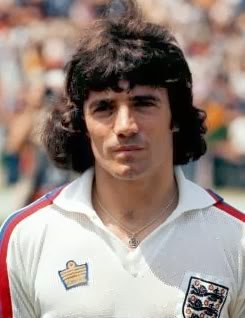 Kevin
Keegan wasn’t so lucky. In 1984 he played with his club Newcastle United against
his old club Liverpool. Keegan, still in very good shape at 33, scored a
penalty in a match that ended 2-2. Liverpool’s Mark Lawrenson nearly spoiled
all the fun with a ferocious tackle on Keegan, which could have ended his
playing days an hour earlier. When Dennis Irwin was awarded a testimonial match
against Manchester City in 2000 for ten years at Manchester United, City’s
George Weah injured him badly in the 37th minute of the match. Irwin
had to be substituted, and missed out on the first five weeks of the upcoming season.
And when Julian Dick got his testimonial between his club West Ham United and
Atletico Bilbao in the same year, it ended in a fight between 17 of the 22 players,
with especially Paulo di Canio, Nigel Winterburn and Joseba Etxeberria behaving
badly.
Kevin
Keegan wasn’t so lucky. In 1984 he played with his club Newcastle United against
his old club Liverpool. Keegan, still in very good shape at 33, scored a
penalty in a match that ended 2-2. Liverpool’s Mark Lawrenson nearly spoiled
all the fun with a ferocious tackle on Keegan, which could have ended his
playing days an hour earlier. When Dennis Irwin was awarded a testimonial match
against Manchester City in 2000 for ten years at Manchester United, City’s
George Weah injured him badly in the 37th minute of the match. Irwin
had to be substituted, and missed out on the first five weeks of the upcoming season.
And when Julian Dick got his testimonial between his club West Ham United and
Atletico Bilbao in the same year, it ended in a fight between 17 of the 22 players,
with especially Paulo di Canio, Nigel Winterburn and Joseba Etxeberria behaving
badly.
It can even
go wrong before a match. In 2008 Jaap
Stam wanted his farewell game (Ajax against an All Star team) to be played in
his hometown Zwolle. Ninety hooligans from Amsterdam terrorized the city centre
of Zwolle before the match. After that, the match itself was interrupted by a
heavy cloudburst. So it really wasn't a happy day for Stam.
Johan Cruijff and Bayern Munich
 Perhaps the
worst farewell match of all came down upon Johan Cruijff in November 1978. As the
obvious choice Barcelona wasn’t able to participate in the match, Ajax decided
to ask Bayern Munich instead. For a moment of total stupidity forgetting the old rivalry
between the two clubs. Cruijff and Ajax humiliated Bayern Munich twice in the early seventies
in the European Cup. And the World Cup final in 1974 didn’t help relations
between the Dutch and the Germans either. It all went wrong when the Germans
thought they were mistreated before the game. No Ajax delegation was present at
the Schiphol airport, the hotel looked cheap and during the warm-up not even one Ajax-player came up to the Germans to say hello. And when the verbal abuse roared from
the stands, Bayern Munich had enough. Goalie Sepp Maier did put on a silly hat just before
the kick-off, but after the whistle had blown they were dead serious. At
half-time Bayern had a 2-0 lead, and they scored another six goals in the
second half to end the match 8-0. The goals were scored by Karl-Heinz
Rummenigge (3), Paul Breitner (3) and Gerd Müller (2). Cruijff played a
decent game himself, but most of his teammates - Ajax wasn't a strong team at the time - were a downright disaster. Twenty five
years later Bayern Munich apologized for winning 8-0. And of course Cruijff
played soccer for another six years or so, so it really wasn’t his farewell
match after all.
Perhaps the
worst farewell match of all came down upon Johan Cruijff in November 1978. As the
obvious choice Barcelona wasn’t able to participate in the match, Ajax decided
to ask Bayern Munich instead. For a moment of total stupidity forgetting the old rivalry
between the two clubs. Cruijff and Ajax humiliated Bayern Munich twice in the early seventies
in the European Cup. And the World Cup final in 1974 didn’t help relations
between the Dutch and the Germans either. It all went wrong when the Germans
thought they were mistreated before the game. No Ajax delegation was present at
the Schiphol airport, the hotel looked cheap and during the warm-up not even one Ajax-player came up to the Germans to say hello. And when the verbal abuse roared from
the stands, Bayern Munich had enough. Goalie Sepp Maier did put on a silly hat just before
the kick-off, but after the whistle had blown they were dead serious. At
half-time Bayern had a 2-0 lead, and they scored another six goals in the
second half to end the match 8-0. The goals were scored by Karl-Heinz
Rummenigge (3), Paul Breitner (3) and Gerd Müller (2). Cruijff played a
decent game himself, but most of his teammates - Ajax wasn't a strong team at the time - were a downright disaster. Twenty five
years later Bayern Munich apologized for winning 8-0. And of course Cruijff
played soccer for another six years or so, so it really wasn’t his farewell
match after all.Raising money for charity
 |
| Claus Lundekvam (Sothampton) |
Norwegian Claus Lundekvam had his farewell match Southampton against Celtic planned just days after a Bon Jovi gig. Rock fans totally ruined the pitch, and as Celtic was unable to reschedule, Lundekvam himself paid for a new pitch. No less than twenty thousand supporters visited the match, making up for his investment.
Two hundred school kids
 |
To end on a
friendly note, Samuel Kuffour from Ghana had his farewell match planned on December 23, 2011. He invited, among others, George Weah, Lothar Matthäus,
Daniel Amokachi, Andy Cole and Jay-Jay Okocha to this game, which took place in Kumasi. The game even got two
former presidents from Ghana burying the hatchet. JJ Rawlings and John Agyekum
Kuffour had been on each other’s throath for a while, but ended their fight on
that day. The match ended 6-5 and of course Sammy Kuffour was allowed to score
from the penalty spot.


